Chancellor’s awards celebrate entrepreneurs advancing cancer care, feeding families, and building transformative companies
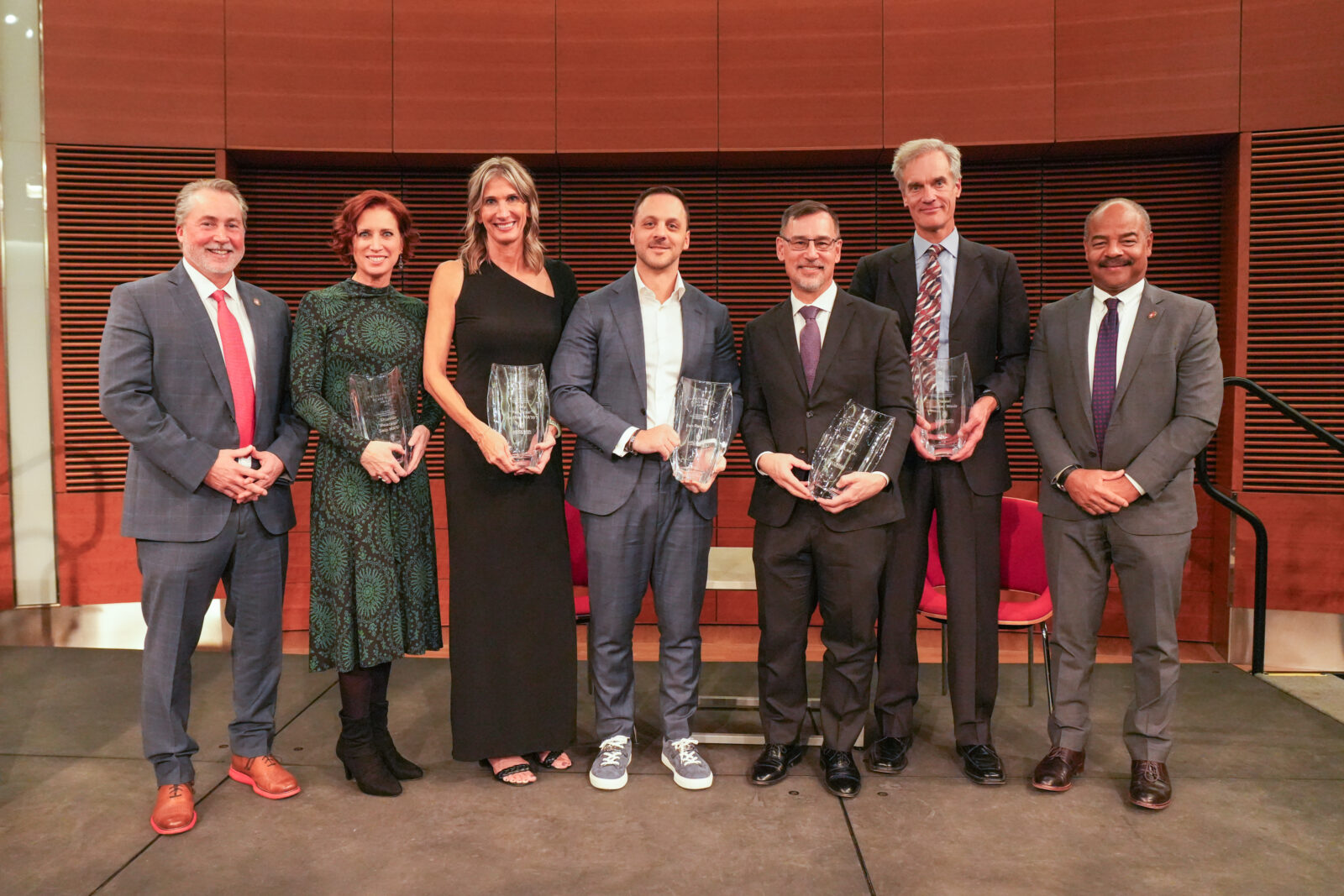
The University of Wisconsin–Madison Office of the Chancellor, in partnership with the Wisconsin Foundation and Alumni Association, recognized Fred T. Lee Jr., Daniel van der Weide, Kelly Parthen, Shannon Seip, and Dan Reich as recipients of the 2026 Chancellor’s Entrepreneurial Achievement Award.
“Entrepreneurship at UW–Madison is intrinsically tied to the Wisconsin Idea — that what happens at this university should improve lives far beyond its boundaries,” says Interim Chancellor Eric Wilcots. “That’s why the Chancellor’s Entrepreneurial Achievement Awards measure success not only in dollars and cents, but also in problems solved and opportunities created for others.”
“These honorees show our students and researchers what’s possible when you take an idea seriously and have the determination to build something around it,” says Lewis Sheats, associate vice chancellor for entrepreneurship and executive director of the Wisconsin Entrepreneurship Hub. “Their stories give the next generation of Badger founders the confidence to take that first step and the encouragement to keep going.”
Established in 2011, the Chancellor’s Entrepreneurial Achievement Awards recognizes UW–Madison innovators and alumni who have contributed to economic growth and the social good, serving as role models for aspiring entrepreneurs for the UW community and inspiring the campus culture of entrepreneurship.
Meet the honorees
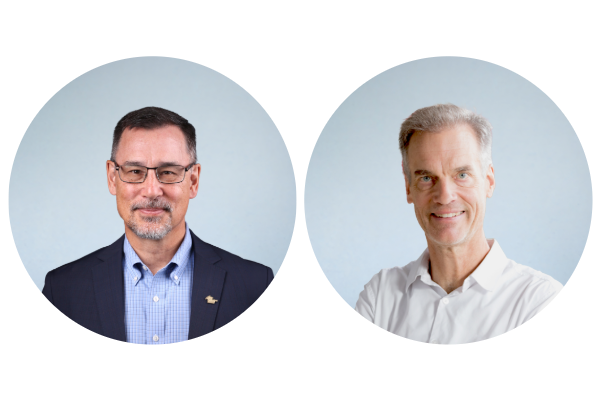
Fred T. Lee Jr., MD and Daniel van der Weide, PhD
Professors and Co-founders, NeuWave Medical and Elucent Medical

Kelly “Pea Brain” Parthen MA ’99 and Shannon “Peacasso” Seip MA ’97
Co-founders and Co-CEOs, Bean Sprouts
A radiologist, an engineer and two breakthroughs in cancer care
Fred T. Lee Jr. is a physician-inventor, though he describes himself as a physician who is interested in inventions because they can lead to better outcomes for his patients.
Lee, a professor of radiology, biomedical engineering and urology at UW–Madison, grew up watching his father — a radiologist who diagnosed his own prostate cancer on an early ultrasound machine — push the boundaries of cancer care.
“(My father) realized that prostate cancer diagnosis and treatment were very primitive in the 1980s,” Lee says. “Eventually he met Gary Onik, a pioneer in tumor cryoablation (freezing cancer cells to kill them), who taught my father how to do it with remarkably good results.”
After arriving at UW–Madison, Lee wanted to apply ablation to other cancers. Radiofrequency ablation (heating cells to kill them) was showing promise in certain organs, but it worked too slowly, pausing for minutes at a time to keep tissue from charring.
“I started thinking, wouldn’t it be great if during those off periods you could power additional probes?” Lee says. “But I’m not an engineer. I knew I wasn’t going to solve this myself.”
The UW–Madison medical school and College of Engineering sit on the same campus, and Lee credits that proximity with what he did next: knocking on engineering professors’ doors until he found John Webster. Webster assigned the project to then-graduate student Dieter Haemmerich, who built an electronic switch to alternate power between multiple probes. That was Lee’s first co-invention, which was licensed through WARF to a biomedical company — and then Lee watched from the sidelines. The company built and marketed the device-which was used all over the world, but didn’t invest much in the design or make important iterative improvements.
“The frustrating part was not being involved,” Lee says. “I said to myself that if lightning ever struck twice, I was going to do it differently.”
Lightning struck at Haemmerich’s thesis defense, where inventor and UW–Madison electrical and computer engineering professor Dan van der Weide sat on the committee.
“Dieter had spent years working on this and this guy comes in and starts hammering him with questions,” Lee recalls. “I was getting a little offended, but then I realized that every time this guy spoke, incredibly intelligent things came out.”
Van der Weide had no medical background — and no preconceived notions about tumor ablation.
“During the PhD exam, I naively asked, ‘Why aren’t you doing this with microwaves?’” van der Weide says.
Lee handed him a biopsy needle. Within 24 hours, van der Weide threaded a coaxial cable inside, tested it in fresh liver tissue and found a sweet spot for delivering microwave energy. Early lab experiments with graduate students Chris Brace and Paul Laeseke even involved bolting six-foot World War II surplus waveguides to a kitchen microwave and hitting the “Popcorn” button, producing a clean ablation — right before the oven sparked and exploded.
Determined to shepherd the technology themselves, Lee and van der Weide co-founded NeuWave Medical, an ablation device company that delivers microwave energy through a needle to treat liver, lung and kidney tumors. NeuWave was funded by Venture Investors, a local venture capital firm. The venture partner assigned to NeuWave was Scott Button, who helped the fledgling company recruit the first CEO, Laura King. After a highly successful run that included becoming the preferred thermal ablation system in the United States, NeuWave was acquired by Johnson & Johnson’s Ethicon in 2016 and has treated over 100,000 patients worldwide.
Their next collaboration started when Lee mentioned another clinical frustration, and van der Weide offered an engineering solution.
“Fred described how the wire localization works for the morning of breast cancer surgery, and I thought it sounded barbaric,” van der Weide says. “I had done a lot of work with RFID, and I thought that placing a smart clip transponder might be a better way to do localization.”
That solution turned into Elucent Medical, a company whose wireless guidance system has been used in nearly 50,000 breast cancer procedures to date.
For both founders, UW–Madison’s environment made the partnerships possible.
“The main thing UW gave me was proximity,” van der Weide says. “Engineering, the medical school and the hospital are not far apart, and people here say yes when you knock on their door.”
That ecosystem also allowed them to build companies while mentoring students who went on to launch startups and join the UW–Madison faculty.
“When you look at successful people, it can seem inevitable that they were going to be successful,” Lee says. ”It wasn’t inevitable. I was incredibly lucky. If I have any talent, it’s the ability to recognize people like Dieter, Paul, Chris and Dan who possess skills that I simply don’t have.”
The business of better meals for curious kids and discerning parents
Business partners Kelly “Pea Brain” Parthen MA ’99 and Shannon “Peacasso” Seip MA ’97 barely overlapped as graduate students in the UW–Madison School of Journalism and Mass Communication. In fact, it took a chance conversation during a fire alarm for them to become friends. At the time, neither imagined they would one day build a company together.
Today, the company they co-founded, Bean Sprouts, has millions of customers annually through 15 locations across eight states, but it began with a much simpler goal.
Shortly after graduating, Parthen and Seip found themselves as young moms juggling kids, careers, and busy lives. They ran headfirst into the reality of being out with their children and finding that many quick, kid-friendly food options were unhealthy, uninspired, or unwelcoming to families.
“We both came from branding and marketing backgrounds, so instead of just seeing a food problem, we saw an opportunity to change the way good-for-you food was presented to kids,” they say.
That opportunity led to the 2007 opening of Bean Sprouts, a standalone café in Middleton, WI, with a goal of creating a place where parents, caregivers, and kids would want to eat. Word spread quickly, and museums and other child-focused destinations began asking Bean Sprouts to cater events and open pop-ups.
“That sparked an ‘aha’ moment: instead of opening cafés and spending advertising and marketing dollars to get families through our door, why not bring Bean Sprouts to places where our target market was already going?” Parthen and Seip explain.
They closed their Middleton café and began partnering with such venues as children’s museums, zoos, and science centers.
“A day at a children’s museum or science center is built around curiosity. Exhibits invite kids to touch, play, and imagine,” Parthen and Seip say. “Then everyone gets hungry and too often, that carefully designed guest experience dead-ends at a counter of hot dogs, deep-fried nuggets, and nachos with neon cheese.”
Moving Bean Sprouts into kid-centric venues helped Parthen and Seip bring healthier, kid-approved food to more families while helping partner organizations make food part of the guest experience. The collaboration is paying off: Bean Sprouts cafés have shown increased capture rates and revenues compared with the venues’ previous foodservice operations.
More than just a revenue success, Parthen and Seip are proud of how they built their company.
“When we started, there weren’t many examples of two women building and scaling a restaurant company together,” they say. “It’s no longer just about what the two of us can build. We’ve tried to create opportunities for women and BIPOC team members to move into leadership positions and we’ve been intentional about building a diverse leadership team and creating pathways for people to grow within Bean Sprouts.”
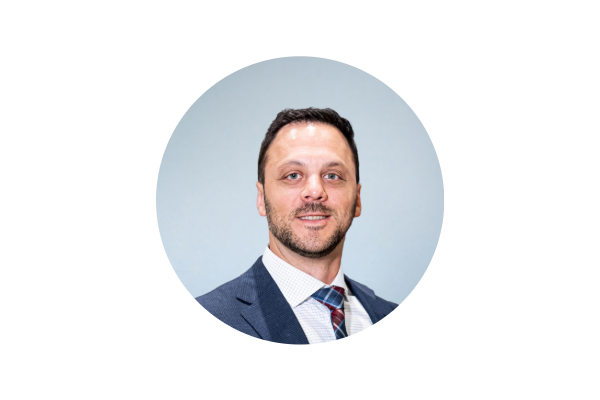
From bouncy balls to big exits: the journey of a serial entrepreneur
Dan Reich ’08 was still in high school when he spotted his first business opportunities. As the internet and e-commerce began taking off, he bought bouncy balls in bulk from the then-new site eBay and sold them from his locker at a profit.
A classmate took notice and introduced Reich to “a guy he knew” who had a warehouse of clothing he wanted to sell online. That meeting led to The Fashion Passion, a wholesale clothing retail site. Reich hired someone to build the e-commerce site, he set up the Google and Yahoo ad campaigns each morning, his partner provided the product, and his customer service rep fulfilled orders. (“By customer service rep, I mean my mom,” Reich jokes).
“That business was going for a little bit, and then we shut it down because we got suspicious things weren’t going right. Lo and behold, it turned out my partner was stealing all the clothing from the backs of trucks,” Reich says. “So that was my first lesson in choosing your partner wisely.”
At UW–Madison, Reich met fellow electrical and computer engineering majors Steve Weisman, with whom he took most of his courses. They were a support network, holding each other accountable for studying and completing projects. Reich knew he had found a good partner in Weisman, and the two started two companies together in college. The first formed after Reich’s fraternity was disaffiliated with campus and could no longer host parties.
“I still wanted to have fun, so I convinced a local restaurant and bar on State Street that had an 18+ allowance to let me throw a party there,” Reich says. “We threw a party, raised money for the Red Cross, and then everyone was asking, ‘When’s the next one?’ So that became a company, Runaway Productions.”
When some friends wanted to start a competing company, Reich and Weisman instead brought them on as partners and moved on to a new company that had some success but was put on hold as Reich and Weisman pursued other post-grad plans.
After graduating in 2008, Reich was meeting new partners, chasing opportunities, and founding new companies. His first job was with an online advertising startup founded by veterans of AOL and Yahoo, which gave him an early lesson in scaling a fast-growing business. Reuniting with UW–Madison alumni Andrew Ferenci and Corey Capasso led to Spinback, a company that helped brands measure the impact of Facebook marketing and was ultimately acquired by Salesforce.
More ventures followed. Reich co-founded Tula Skincare, which grew to roughly $150 million in sales before being acquired by Procter & Gamble; Troops.ai, a business-data platform later acquired by Salesforce; and a string of other consumer product, beauty, and technology companies, one partnered with actress Lili Reinhart and one with UFC founder Dana White. All told, he has launched nearly a dozen companies.
Even across industries, one commonality is clear: Reich repeatedly built companies by spotting emerging opportunities, finding the right collaborators, and moving quickly when others saw uncertainty.
A favorite story of his about one of his companies came after a friend lost the password to an early cryptocurrency investment. Reich embarked on a years-long quest to recover the assets, eventually tracking down a hacker known as “The Kingpin” and recovering nearly $2 million worth of Theta coin. That adventure led to the creation of a white-hat cybersecurity company that helps clients recover inaccessible cryptocurrency wallets.
Today, Reich continues to build companies while supporting the next generation of entrepreneurs as an investor in roughly 100 startups. Outside of business, he volunteers with the ski patrol in Vermont, serves on the board of Hillel at UW–Madison, and recently helped rededicate the Hebrew Academy in honor of his grandparents, who survived the Holocaust.